Patio Awnings South Africa: How to Choose the Right Patio Cover for Your Home
South Africans love outdoor living. Whether it’s a Sunday braai, an afternoon around the pool or simply enjoying coffee outside, a well-designed patio can become one of the most-used areas of your home.
The problem is that South Africa’s climate doesn't always cooperate.
Strong summer sunshine can make an uncovered patio uncomfortable during the hottest part of the day, while UV exposure, rain and changing weather can limit how often you use the space.
That’s where a properly selected patio awning can make a significant difference.
But with different materials, sizes, projections and awning systems available, how do you know which patio cover is right for your home?
This guide explains what South African homeowners should consider before choosing a patio awning.
Why Install a Patio Awning?
A patio awning essentially extends the usable living area of your home by creating a protected transition between indoor and outdoor spaces.
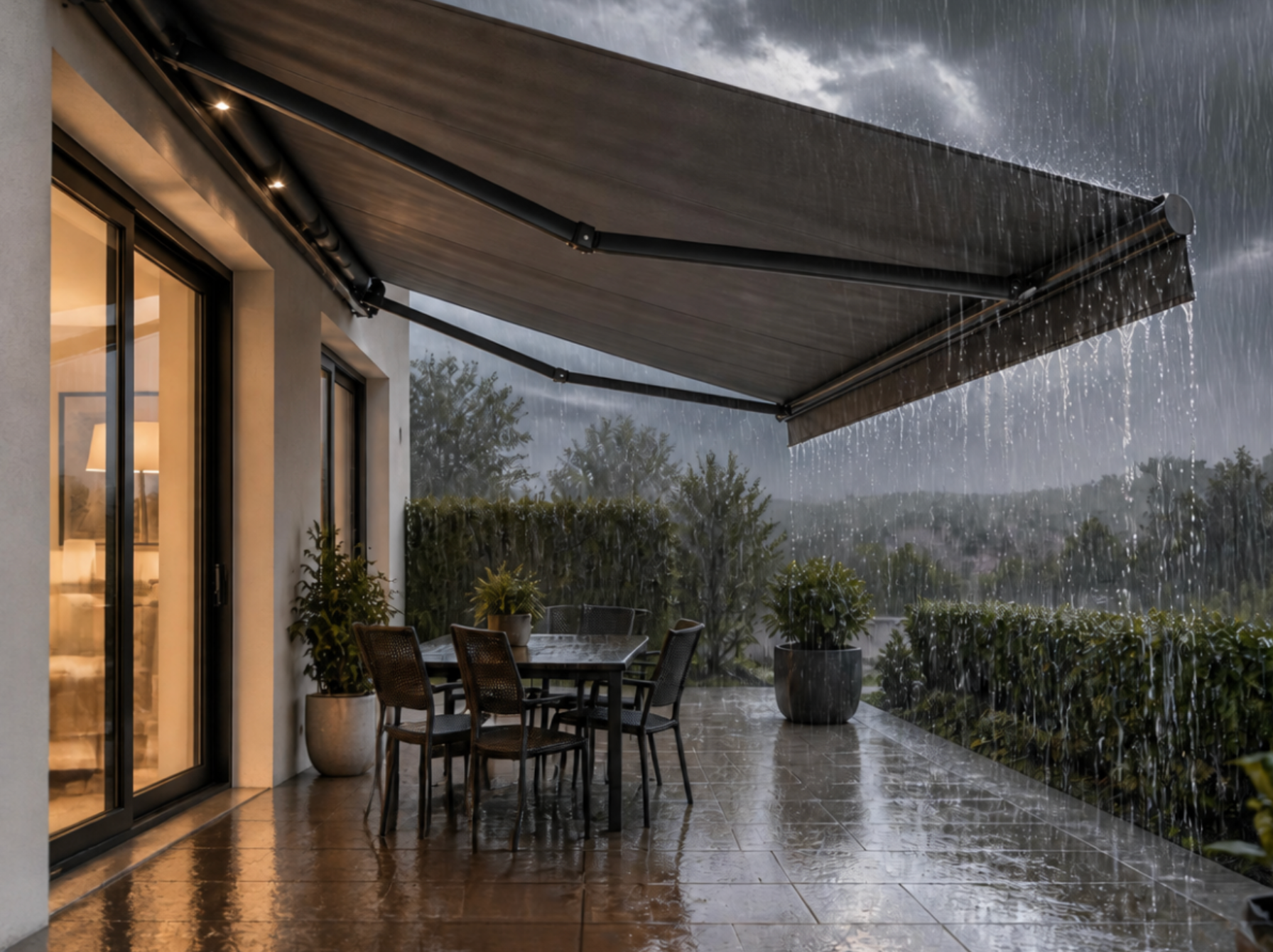
Instead of your patio being completely exposed to the elements, an awning can provide protection from direct sunlight and rain while still allowing the area to feel open.
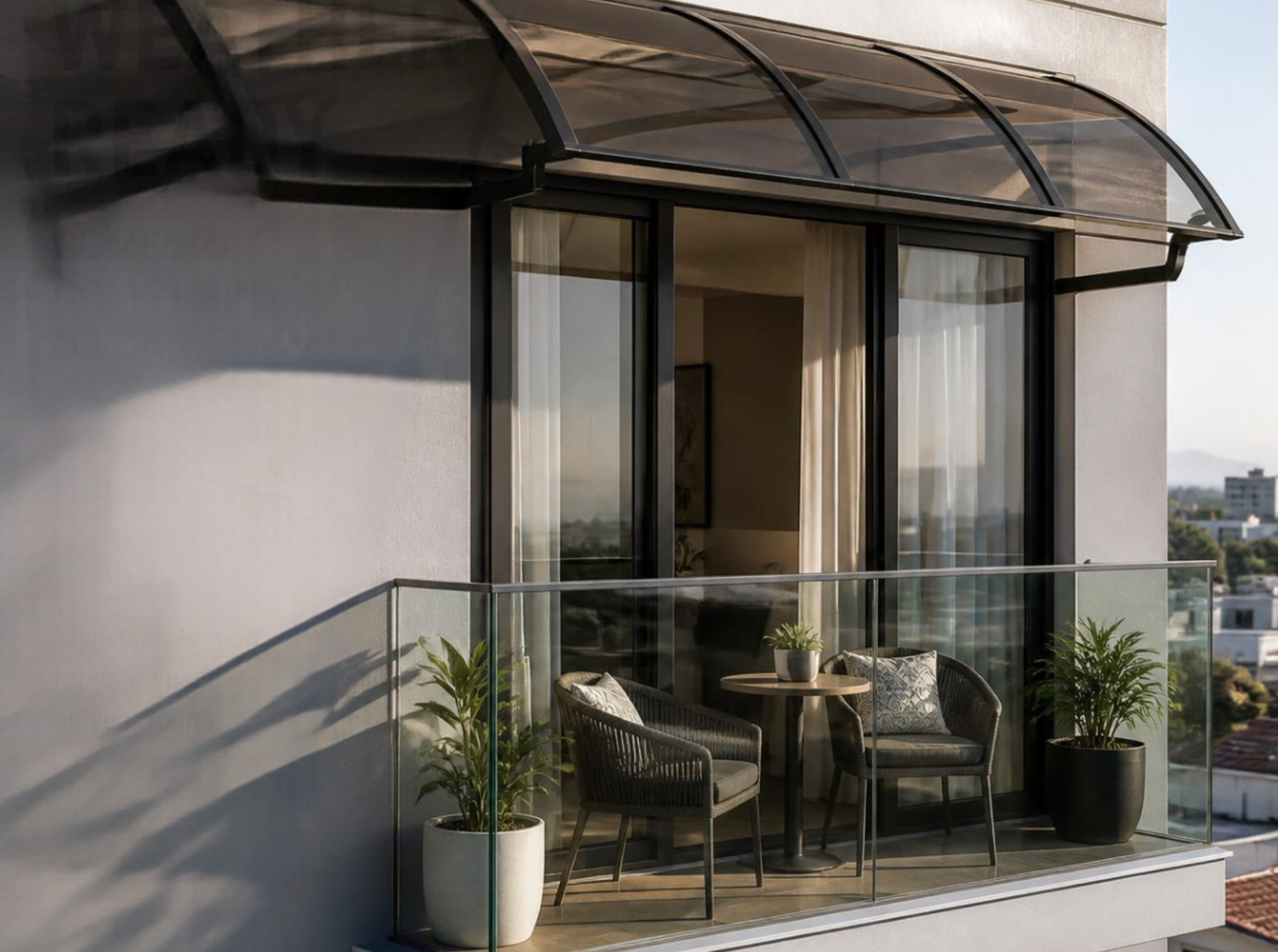
Depending on its position and design, a patio awning may also help shade nearby windows and doors.
That becomes particularly valuable on areas of the home exposed to strong afternoon sunshine.
For many homeowners, however, the biggest advantage is simply being able to use the patio more often.
A shaded entertainment area can become a comfortable place for dining, relaxing and entertaining throughout much more of the year.
Start by Considering How You Use Your Patio
Before choosing an awning, think about what you actually want to protect.
A small awning positioned above a doorway has a very different job from a large patio cover protecting an outdoor dining table.
Ask yourself:
• Do you mainly need shade or protection from both sun and rain?
• Are you covering a doorway, seating area or complete entertainment space?
• How far does the awning need to project from the building?
• Which direction does the patio face?
• Does low afternoon sun enter the area?
• Will the awning also protect windows or sliding doors?
These questions will help determine the size, projection and material most appropriate for the installation.
Patio Awning Projection Matters
One of the most important measurements when selecting a patio awning is its projection — how far the awning extends outward from the wall.
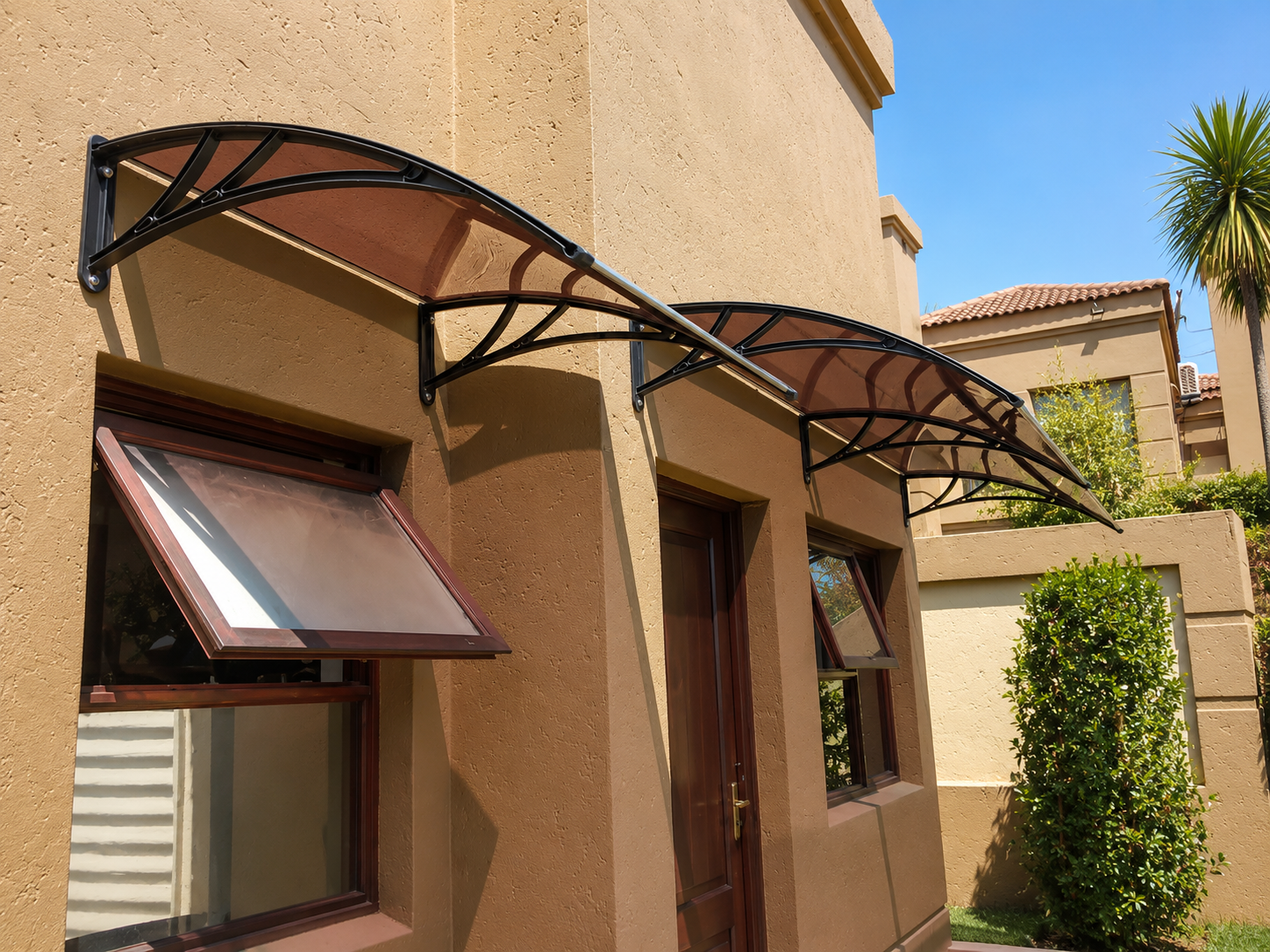
A shallow awning may work well above a window or doorway but won't necessarily provide enough coverage for an outdoor table or seating area.
Larger patios generally require greater projection.
The current Reboss range includes systems with different projections, ranging from more compact window applications through to larger P-Series and R-Series systems designed for greater coverage.
The correct solution therefore depends on the dimensions of the space rather than simply choosing the biggest awning available.
Acrylic vs Polycarbonate Patio Awnings
The covering material has a major influence on the appearance and performance of your patio awning.
Two popular options are acrylic and polycarbonate.
Acrylic
Acrylic sheeting provides excellent optical clarity and can create a clean, premium appearance.
It works particularly well where homeowners want weather protection without making the patio feel dark or enclosed.
Clear and tinted options can also allow you to balance natural light with shade.
Polycarbonate
Polycarbonate is another popular choice for outdoor applications because of its durability and impact resistance.
Different polycarbonate configurations can be selected depending on the application, including multiwall material where additional insulation and coverage are desirable.
For homeowners unsure which material is appropriate, we've covered the differences in greater detail in our guide to acrylic vs polycarbonate awnings.
Clear, Bronze or Solid Cover?
Material is only part of the decision.
The colour and transparency of the covering also influence the environment underneath the awning.
Clear panels maximise natural light and are ideal where maintaining brightness is a priority.
Bronze or tinted panels can soften harsh sunlight while retaining some transparency.
Opaque solutions provide substantially more shade and may suit areas where blocking direct sunlight is the primary objective.
Consider the room behind the patio too.
A very dark covering positioned outside large sliding doors could reduce the amount of natural light entering the adjoining room. Conversely, a completely transparent covering may not provide the level of shade you want on a particularly hot, exposed patio.
The ideal solution balances shade, natural light and weather protection.
Think About the Direction Your Patio Faces
Orientation is particularly important in South Africa.
A patio that receives gentle morning sunshine behaves very differently from one exposed to intense late-afternoon sun.
West-facing outdoor areas can become particularly uncomfortable during hot summer afternoons because the sun sits lower in the sky.
In those situations, simply extending an awning further outward may not completely solve the problem because low-angle sunlight can enter underneath the canopy.
The position of the sun throughout the day should therefore form part of the design process.
Can Patio Awnings Help Keep Your Home Cooler?
They can contribute to reducing direct solar exposure around windows and glazed doors.
External shading is especially useful because it intercepts sunlight before it reaches the glass.
If your patio sits outside large sliding or stacking doors, shading that area can therefore have benefits beyond making the patio itself more comfortable.
We explore this in greater detail in our guide to how awnings reduce heat and can lower electricity use in South African homes.
Consider Rainwater
A patio awning should also be designed with water management in mind.
Adequate slope allows rainwater to move away from the building rather than collecting on the covering.
Installation position, projection and the surrounding architecture can all influence how effectively water is managed.
This is one reason why accurate measurements before installation are so important.
Don't Forget the Structure
People naturally focus on the covering material, but the support structure is equally important.
An awning is permanently exposed to outdoor conditions, including wind, heat and rain.
Bracket design, fixing points and the condition of the wall all need to be considered.
The correct installation method may differ depending on whether you're fixing into brickwork, concrete or another substrate.
If you're considering installing the system yourself, read our DIY awning installation guide before starting.
Which Reboss Awning Is Best for a Patio?
There isn't one answer for every property.
Reboss offers several awning systems with different projections, allowing the product to be matched more closely to the area being covered.
Compact systems are suitable for smaller openings, while larger P-Series and R-Series awnings provide greater projection for applications requiring more coverage.
Multiple units may also be used depending on the width and configuration of the installation.
The important thing is to choose the system based on the dimensions and requirements of your patio rather than appearance alone.
Our Reboss awning size and series guide explains the differences between the H-, D-, M-, P- and R-Series in more detail.
Measuring Your Patio
Before requesting or ordering an awning, measure:
1. Width
Measure the total width of the area you want protected.
Remember that covering only the exact width of a doorway may not provide adequate protection at the sides.
2. Projection
Estimate how far the awning needs to extend from the wall to shade or protect the desired area.
3. Available mounting area
Check that there is sufficient space above the window or door for brackets and the required slope.
4. Obstructions
Look for gutters, downpipes, lights, security equipment and other features that could affect installation.
Accurate measurements at this stage can prevent problems later.
Patio Awning or Full Patio Roof?
Not every outdoor area requires a complete roof structure.
If you want to permanently enclose a very large entertainment area, a purpose-built patio roof may ultimately be more appropriate.
But if you want targeted protection while maintaining an open outdoor environment, an awning can be an elegant and relatively simple solution.
Awnings are particularly effective over:
- Sliding doors
- Outdoor seating areas
- Braai areas
- Balconies
- Smaller entertainment patios
- Walkways
- Entrances
The right solution ultimately depends on how much of the area you want covered.
Choosing the Right Patio Awning in South Africa
A good patio awning shouldn't feel like an afterthought.
It should complement the architecture of the property while providing the level of shade and weather protection the space actually needs.
Before choosing yours, consider the width, projection, orientation, covering material, transparency and mounting requirements.
Taking those factors into account will help you create an outdoor area that looks good and is considerably more comfortable to use.
Looking for a Patio Awning?
Reboss offers a range of modular awning systems for residential and commercial applications across South Africa.
Explore the available sizes, materials and awning configurations to find a solution suited to your patio.
RELATED POSTS