How Reboss Awnings Reduce Heat and Lower Your Electricity Bill in South Africa
South Africa has some of the highest electricity costs in the developing world — and they keep rising. For homeowners and businesses looking for practical ways to reduce their energy consumption, one of the most effective and overlooked solutions is also one of the most visible: awnings.
A quality awning installed over a window, door, or patio does far more than provide shade. By intercepting solar radiation before it reaches the glass, an awning prevents heat from entering the building in the first place — reducing the load on air conditioning systems, lowering indoor temperatures, and delivering measurable reductions in electricity consumption.
In this post we explain exactly how awnings reduce heat in South African buildings, what the science says about the energy savings potential, and why Reboss acrylic and polycarbonate awnings are one of the most cost-effective energy efficiency upgrades available for South African homes and businesses.
The Problem: Solar Heat Gain Through Windows
The primary driver of unwanted heat build-up in South African buildings is solar radiation entering through windows and glass doors. Glass transmits a significant proportion of the solar energy that strikes it — including visible light and near-infrared radiation — directly into the interior space.
Once this solar energy enters the room and is absorbed by floors, walls, furniture, and other surfaces, it converts to heat — raising the indoor temperature and increasing the demand for air conditioning to maintain comfort.
North and west-facing windows are the most significant contributors to solar heat gain in South African buildings. North-facing windows receive direct sun throughout the day. West-facing windows receive intense afternoon sun during the hottest part of the day — making them the primary driver of peak cooling demand in most South African homes.
The Solution: Intercept Solar Radiation Before It Reaches the Glass
The fundamental principle behind awnings as an energy efficiency measure is straightforward: if you intercept solar radiation before it reaches the window glass, it cannot enter the building and cannot heat the interior.
An awning mounted above a window creates a shaded zone that prevents direct sunlight from striking the glass during peak sun hours. The solar energy is absorbed and re-radiated by the awning — outside the building — rather than being transmitted through the glass and converted to internal heat.
This approach is significantly more effective than internal shading devices such as blinds, curtains, and internal roller shades. By the time solar radiation has passed through the glass and reached an internal blind, the heat has already entered the room. The blind absorbs the energy and re-radiates it as heat into the interior — providing visual shade but limited thermal benefit. An external awning prevents this heat entry entirely.
How Much Heat Do Reboss Awnings Block?
UV Radiation — Up to 99% Blocked
Reboss acrylic and polycarbonate awnings block up to 99% of harmful UV radiation. UV radiation is responsible for the fading and degradation of interior materials — carpets, curtains, timber flooring, leather upholstery, and artworks. While UV radiation represents a relatively small proportion of total solar heat gain, its elimination protects the long-term value of interior furnishings and reduces replacement costs over time.
Solar Heat Gain Reduction
The thermal benefit of an awning depends on the material, tint, and orientation of the installation. As a general guide:
- Clear acrylic or polycarbonate — allows maximum natural light while blocking UV radiation. Provides moderate heat gain reduction through shading of the window frame and sill area.
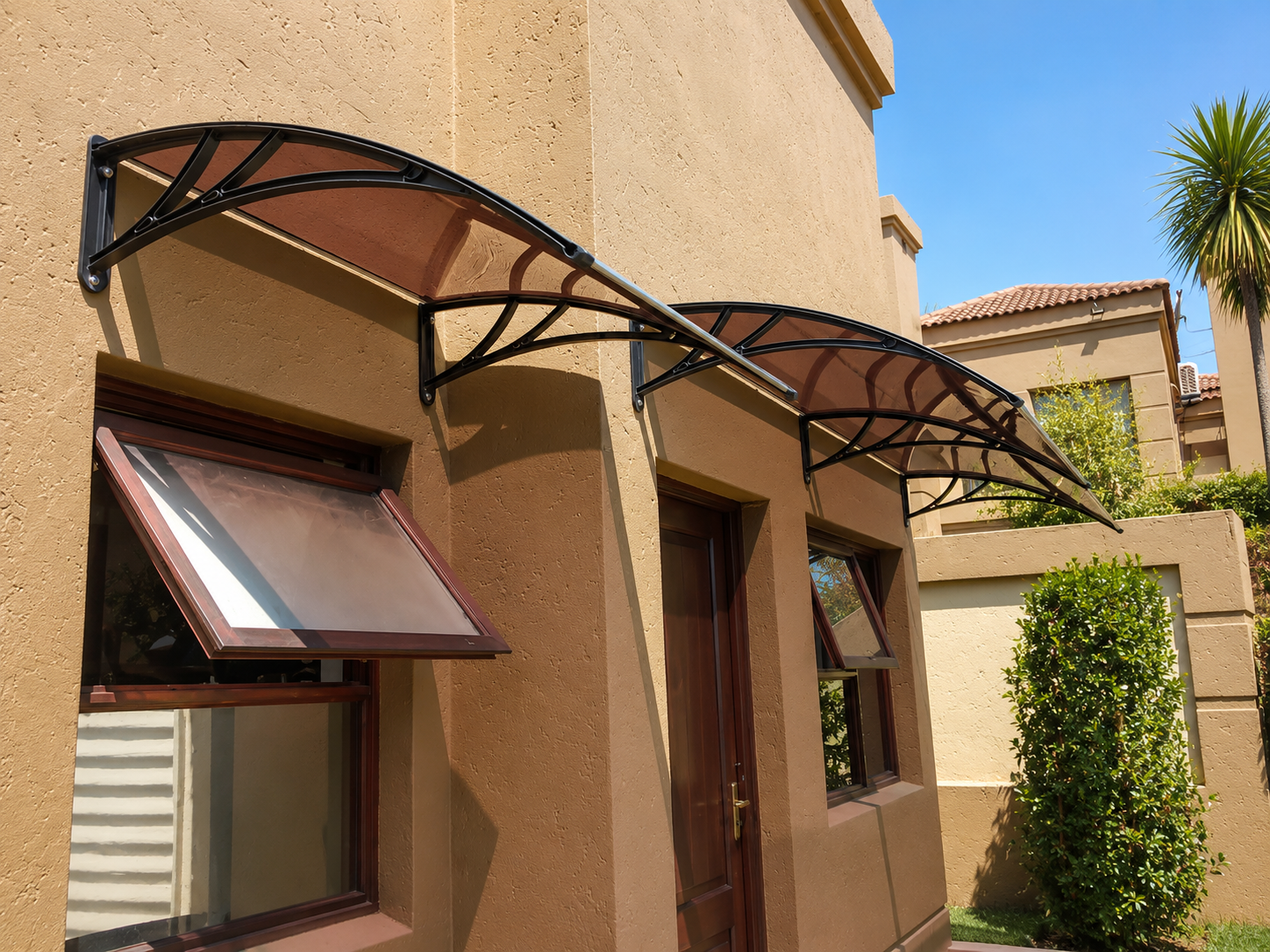
- Bronze tinted acrylic or polycarbonate — reduces visible light transmission to approximately 50-87% depending on the specific product, with proportionally greater heat gain reduction. A good balance of natural light and thermal performance for most South African applications.
- Aluminium coloured board — blocks all direct sunlight and provides maximum heat gain reduction. Best for applications where shade is the absolute priority and natural light is not required.
Air Conditioning Load Reduction
Independent research consistently shows that external awnings over north and west-facing windows can reduce air conditioning energy consumption by 25 to 50% for those zones of a building during peak summer conditions. The actual saving depends on the size of the windows, the specific climate, the building construction, and the existing insulation — but the directional evidence is clear and consistent.
For South African homes and businesses that run air conditioning for significant periods during the October to March summer season, this represents a meaningful reduction in electricity consumption and cost.
The Load Shedding Benefit
South Africa's ongoing electricity supply challenges give the energy efficiency benefit of awnings additional relevance. For homes and businesses that rely on inverters, solar systems, or generators during load shedding, every reduction in air conditioning load directly extends battery run time or reduces generator fuel consumption.
An awning that reduces air conditioning demand by 30% during peak sun hours means 30% more run time from the same battery capacity — a tangible, practical benefit that goes beyond the electricity bill saving.
Beyond Heat Reduction — The Full Value Equation
The energy saving benefit of awnings should be considered alongside the full range of value they deliver:
- UV protection — blocking up to 99% of UV radiation protects interior furnishings, flooring, and artworks from fading and degradation, extending their service life and preserving their value
- Rain protection — keeping windows and doors dry reduces water damage to frames, sills, and the wall below, reducing maintenance costs over time
- Natural light — unlike solid external shading devices, clear and tinted acrylic and polycarbonate awnings allow natural light to continue entering the room while blocking heat and UV — maintaining a pleasant, bright interior without the thermal penalty of direct sun
- Property value — a quality awning installation adds perceived and actual value to a property, contributing to a positive return on investment when the property is sold
Which Reboss Awning is Best for Heat Reduction?
For Windows and Doors
The Reboss R-Series is the ideal solution for window and door heat reduction applications. Available in bronze tinted polycarbonate for the best balance of heat reduction and natural light, the R-Series installs quickly and provides immediate, measurable thermal benefit. For maximum heat reduction, the aluminium coloured board option blocks all direct sunlight completely.
For Patios and Outdoor Areas
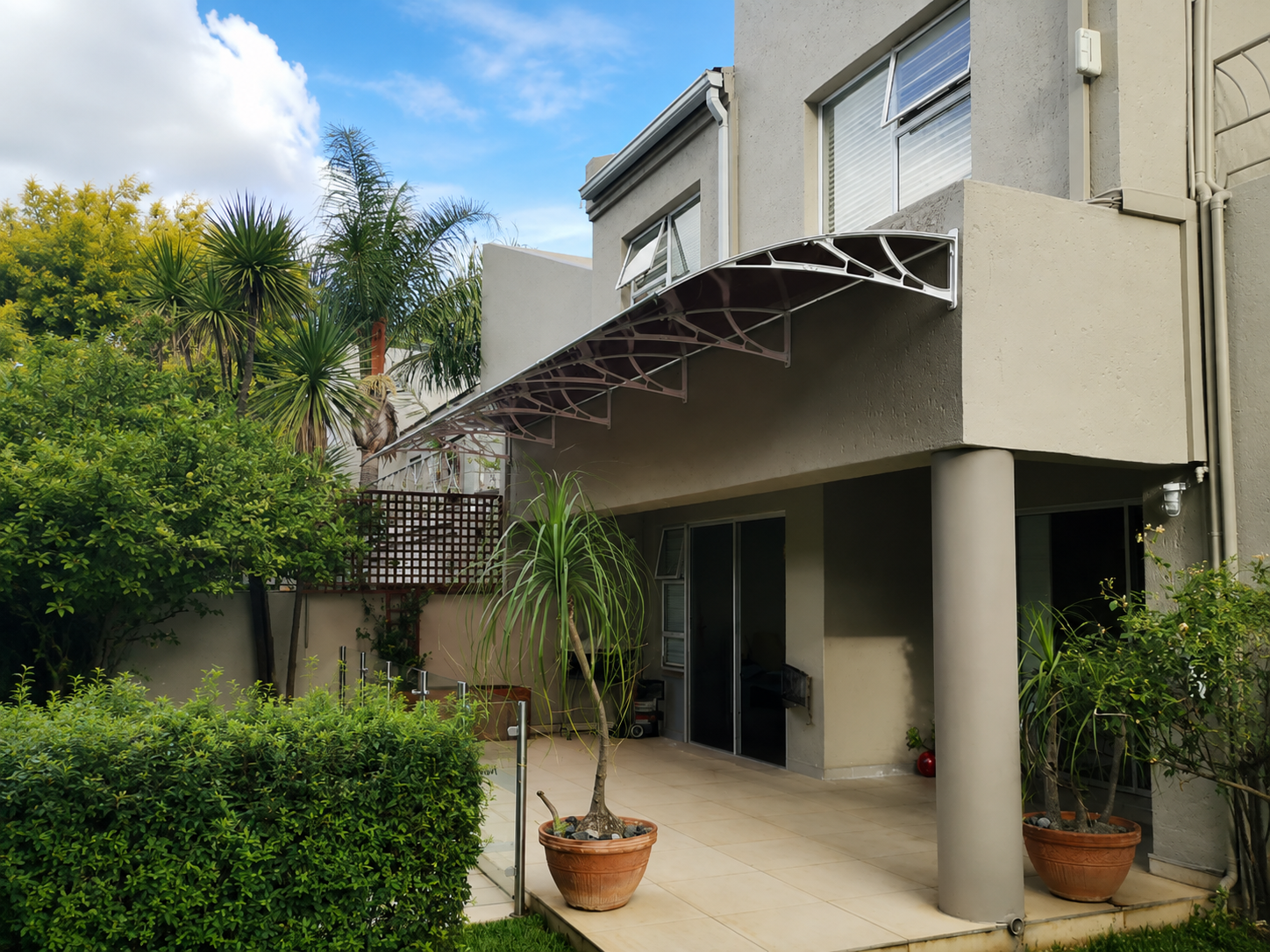
For larger patio areas where heat management is a priority, Reboss multiwall polycarbonate patio structures provide excellent thermal performance — the hollow chamber construction of multiwall panels creates an insulating barrier that significantly reduces heat transfer compared to single-layer sheeting.
Get Expert Advice From Reboss
Our team can assess your specific property and recommend the right combination of products and tints to maximise heat reduction for your situation. We offer free, no-obligation consultations and quotations for all residential and commercial projects.
We supply and install nationwide across all nine provinces of South Africa.
→ Read Our Complete Guide to Dome Awnings in South Africa
RELATED POSTS