Dome Awnings South Africa: The Complete Guide to Barrel Vault Awnings
There is a reason dome awnings and barrel vault canopies have been a feature of prestigious buildings for centuries. The curved form is inherently strong — distributing loads across the arc rather than concentrating stress at a single point — and inherently elegant, adding architectural character that flat or sloped awnings simply cannot match.
In South Africa, dome awnings and barrel vault canopies are enjoying a resurgence in popularity — not just for the grand hotel entrances and upmarket retail shopfronts where they have always been at home, but increasingly for residential entrances, windows, and patio features where homeowners want something that stands apart from the standard flat canopy.
Reboss is one of South Africa's leading manufacturers of custom dome and barrel vault awnings, producing these structures from our Johannesburg facility for clients across the country. This complete guide covers everything you need to know about dome awnings in South Africa — what they are, how they are made, where they work best, and how to choose the right one for your application.
What Is a Dome Awning?
A dome awning — also known as a barrel vault canopy or curved awning — is an awning structure with a curved rather than flat or sloped profile. Instead of a flat sheet or angled panel, the awning surface follows a continuous curve from one side of the frame to the other, creating the characteristic arched appearance.
The term barrel vault refers to the specific curved geometry — a continuous semicircular or segmental arch, like the inside of a barrel, extended over the length of the opening. A dome awning typically refers to a single curved canopy over a window, door, or entrance, while a barrel vault may describe a longer curved structure over a walkway or passage.
In practical terms, both terms refer to the same family of products and are often used interchangeably in the South African market.
How Are Dome Awnings Made?
The Frame
The structural framework of a Reboss dome awning is fabricated from aluminium or steel profiles that are bent to the correct curve radius using specialist forming equipment. The curved ribs of the frame support the sheeting and give the dome its characteristic shape. The frame is then powder-coated in the client's choice of colour before the sheeting is fitted.
The quality of the frame fabrication is critical to the finished appearance of the dome — a precisely formed frame produces a smooth, consistent curve that looks architectural and deliberate. A poorly formed frame produces a lumpy, irregular curve that undermines the visual impact of the product.
The Sheeting
Reboss dome awnings are manufactured using two primary sheeting materials — acrylic and polycarbonate — each of which can be cold-formed to moderate curves without heat treatment, or thermoformed for tighter radius curves.
Cold forming — bending the sheet to shape during installation — works well for larger radius curves and is the most cost-effective approach. Thermoforming — heating the sheet to a precise temperature and forming it over a mould — allows tighter curves and more complex shapes but adds to manufacturing time and cost.
For most standard residential and commercial dome awning applications, cold-formed acrylic or polycarbonate sheeting produces an excellent result.
Dome Awning Materials — Acrylic vs Polycarbonate
Acrylic Dome Awnings
Acrylic is the traditional and most widely used material for dome awnings in South Africa. Its excellent optical clarity — very close to glass — gives acrylic dome awnings a premium, glazed appearance that suits formal architectural contexts particularly well. Clear acrylic allows maximum light to flood through the canopy, creating a bright, airy impression at entrances and over windows.
Acrylic is approximately 130% stronger than glass and provides excellent UV protection — blocking up to 99% of harmful UV radiation while transmitting natural light. It accepts cold forming to moderate curves well and produces a clean, smooth surface finish.
- Appearance: Crystal clear, glass-like optical quality
- UV protection: Blocks up to 99% of UV radiation
- Strength: 130% stronger than glass
- Available tints: Clear, bronze tint, grey tint, aluminium coloured
- Best for: Formal entrances, retail shopfronts, residential windows where visual elegance is the priority
Polycarbonate Dome Awnings
Polycarbonate offers the highest impact resistance of any transparent awning material — approximately 200% stronger than glass. For dome awnings installed in hail-prone areas of Gauteng, the Free State, and Mpumalanga, polycarbonate provides a significant advantage over acrylic in terms of resistance to hail damage.
Multiwall polycarbonate also offers superior thermal insulation compared to single-layer acrylic — keeping the area beneath the dome noticeably cooler on hot summer days. Reboss polycarbonate products carry a 25-year lifespan and 10-year product guarantee.
- Appearance: Slightly less optical clarity than acrylic but still highly transparent
- UV protection: Blocks up to 99% of UV radiation
- Strength: 200% stronger than glass — superior hail resistance
- Available tints: Clear, bronze tint, opal white
- Best for: Hail-prone areas, applications where impact resistance is the priority
Where Are Dome Awnings Used in South Africa?
Residential Entrances and Front Doors
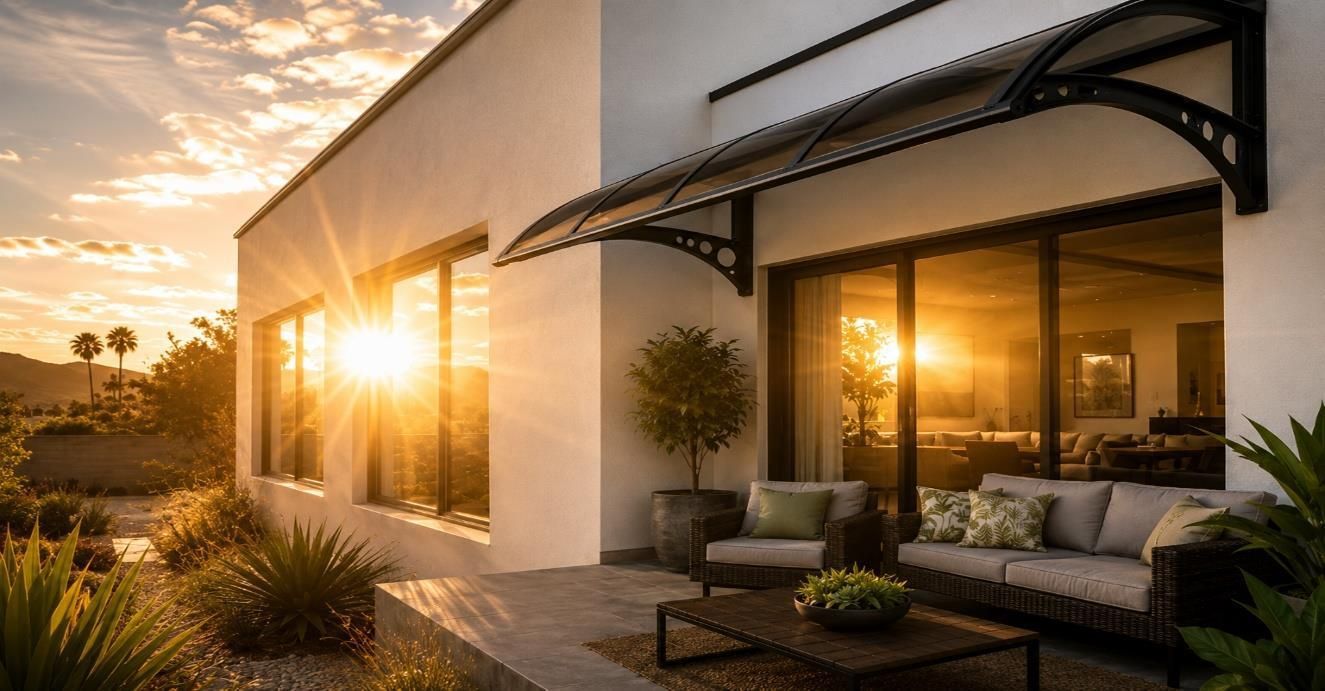
The most common residential application for dome awnings is over the front door and entrance area. A curved canopy over a front door adds immediate visual distinction to a home's facade — signalling quality and attention to detail that a standard flat awning cannot convey. It also provides practical protection from rain and sun for visitors approaching the entrance.
For double-door entrances, wider barrel vault canopies spanning the full width of the entrance create a grand, hotel-like impression that dramatically elevates the character of the property.
Residential Windows
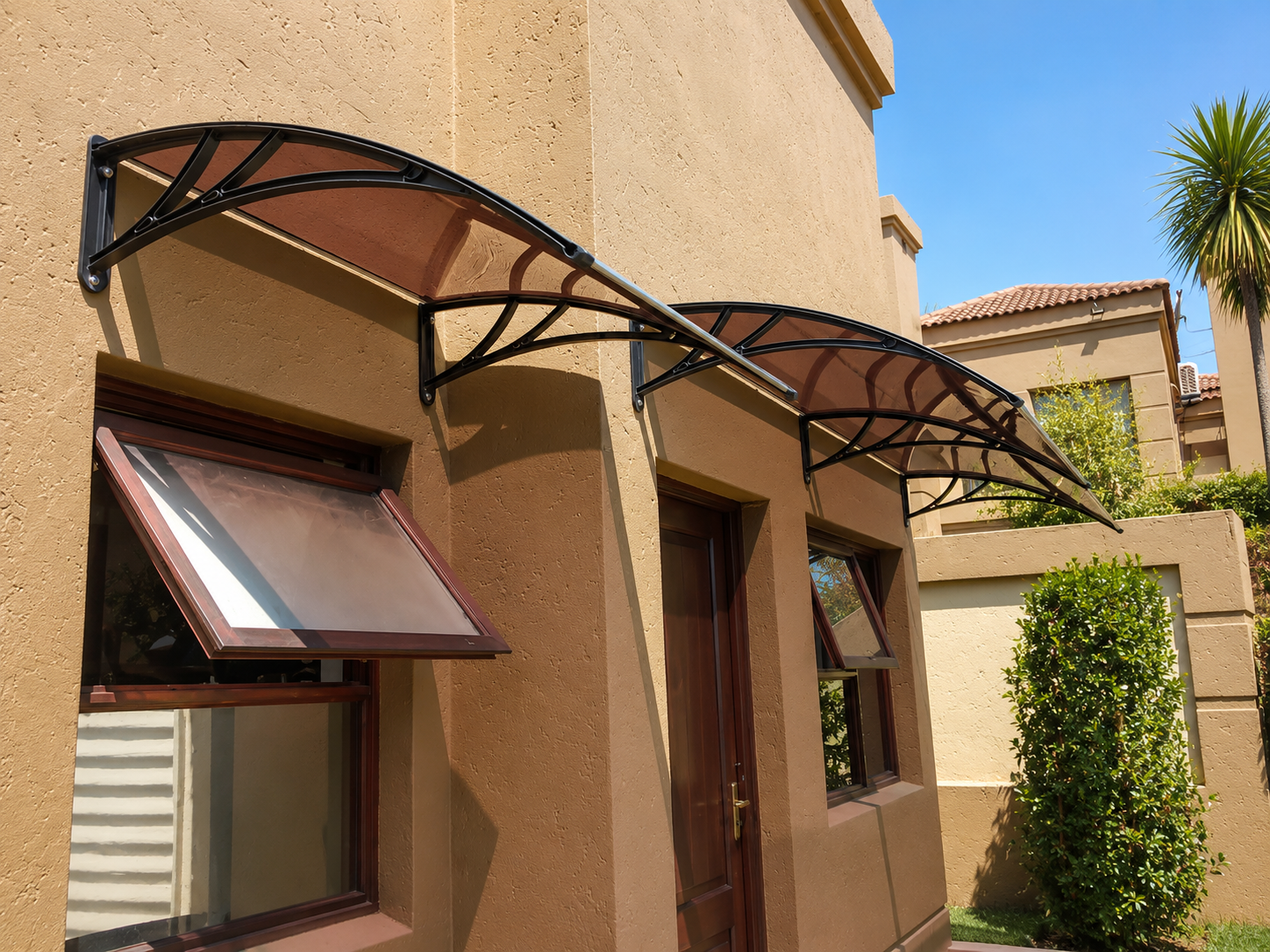
Dome awnings over individual windows are a popular alternative to the flat R-Series panel for homeowners who want something more architecturally distinctive. The curved profile naturally sheds rain more effectively than a flat panel and the visual character it adds to the facade can transform the appearance of an ordinary window.
Multiple dome awnings installed uniformly across a building facade create a cohesive, designed appearance that gives the property a premium, European character.
Retail Shopfronts and Commercial Entrances
Dome awnings and barrel vault canopies have a long history in the retail and hospitality sector. Over a shopfront entrance, a well-executed dome canopy communicates quality, permanence, and attention to detail — qualities that customers associate with trusted, established businesses. Many of South Africa's most recognisable retail and hospitality brands use dome canopies as a key element of their branded store design.
For commercial applications, dome awnings are typically fabricated in larger sizes, with the option for illuminated panels and branded colour powder coating to integrate with the client's corporate identity.
Walkways and Passages
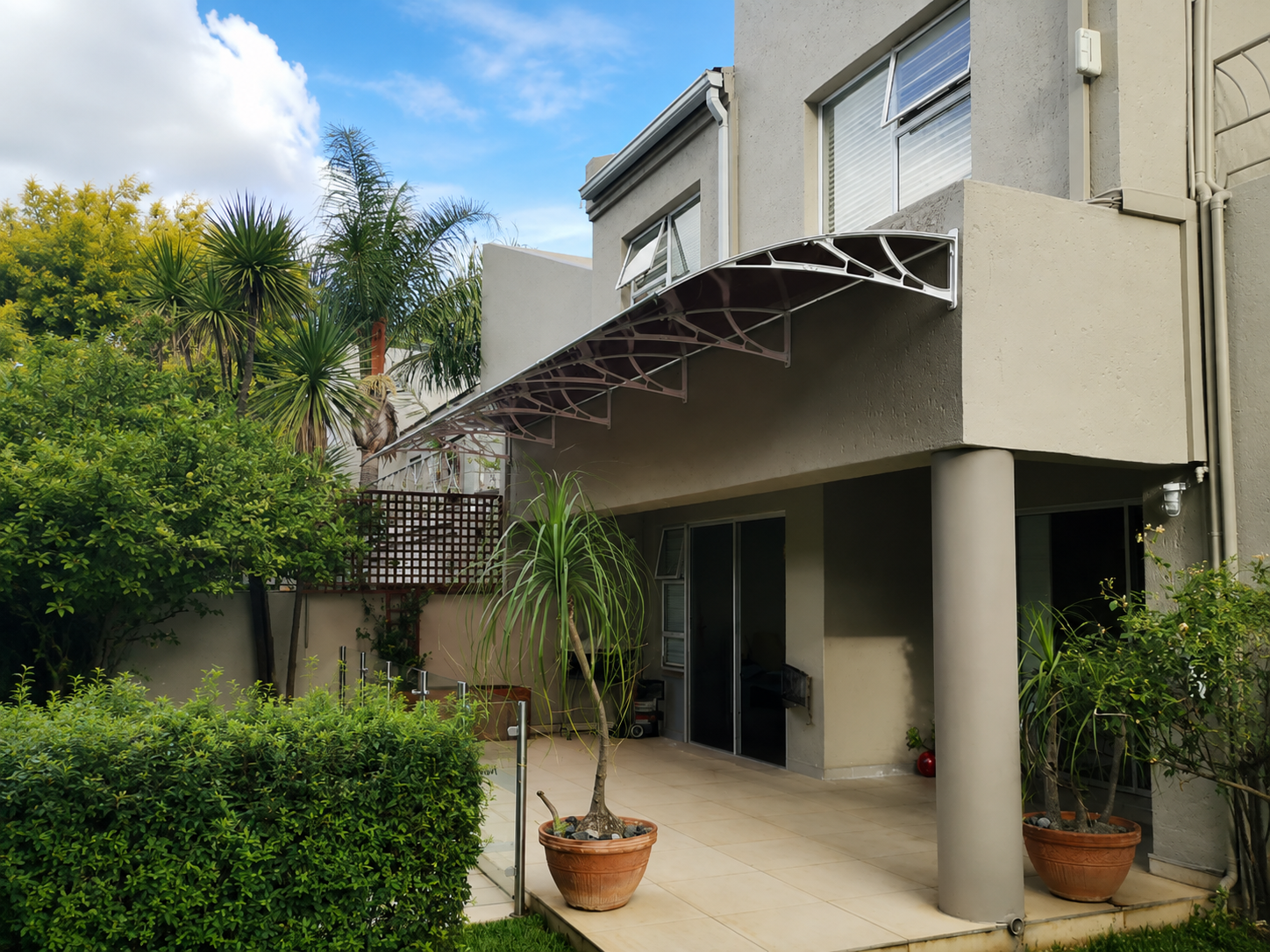
Longer barrel vault structures covering walkways, passages, and covered access routes are another popular application. A barrel vault walkway cover combines weather protection for pedestrians with an architectural quality that elevates the overall design of the building or development.
This application is particularly common in sectional title developments, office parks, shopping centres, and hotel properties where covered pedestrian routes between buildings are required.
Pool Houses and Entertainment Areas
Smaller dome canopies can be used as decorative and functional features in residential gardens and entertainment areas — over outdoor bars, braai areas, pool equipment rooms, and garden structures where a curved roof adds visual interest and weather protection.
Custom vs Standard Dome Awnings
Unlike the R-Series flat panel awning which is available in standard width and depth combinations, dome awnings and barrel vault canopies are inherently custom products. Every installation has specific requirements in terms of:
- Opening width — the span the dome must cover
- Curve radius — how pronounced the arch is
- Projection depth — how far the dome extends from the wall
- Rise height — the height of the curve at its highest point
- Fixing method — wall-mounted, freestanding, or integrated with the building structure
Reboss manufactures dome awnings to custom specifications for each project. Our team works with you to determine the correct dimensions for your specific opening, recommend the appropriate material and tint, and produce a custom structure that fits your property precisely.
This custom manufacturing approach means that no two Reboss dome awnings are identical — each one is designed and fabricated specifically for its installation.
The Installation Process
Dome awning installation is more technically demanding than flat panel awning installation due to the custom nature of the product and the structural requirements of the curved frame. Reboss recommends professional installation for all dome awning projects.
Our installation process for dome awnings typically follows these steps:
- Site assessment — our team visits the site to measure the opening precisely and assess wall construction, fixing points, and any access considerations
- Design and quotation — we produce a detailed design drawing and written quotation for client approval
- Manufacturing — the custom frame and sheeting are fabricated at our Johannesburg facility
- Installation — our experienced installation team fits the dome awning, typically completing residential installations within a single day
- Inspection and handover — we inspect the completed installation and brief the client on care and maintenance
Maintenance of Dome Awnings
Dome awnings are low-maintenance products that will retain their appearance and performance for many years with minimal care. We recommend:
- Periodic cleaning with clean water and a soft cloth to remove dust, bird droppings, and surface contamination
- Mild dish soap for any stubborn marks — rinse thoroughly afterwards
- Annual inspection of the frame fixings to ensure all anchor bolts and brackets remain secure
- Inspection of the sheeting after any significant hail event
- Never use abrasive cleaners or solvents on the sheeting — these will scratch the surface and degrade the UV protective coating
Why Choose Reboss for Your Dome Awning?
Reboss has been manufacturing custom dome and barrel vault awnings in South Africa for over 20 years. As a manufacturer — not a reseller — we control every aspect of the product from material selection and frame fabrication through to installation and aftercare.
- Custom manufacturing for every project — no off-the-shelf compromise
- Over 20 years of experience in dome and barrel vault awning manufacture
- Acrylic and polycarbonate options in the full range of colours and tints
- Professional installation by our trained installation teams
- Nationwide service across all nine provinces
- Free no-obligation site assessments and quotations
- Every review publicly verifiable
RELATED POSTS